98765

Car Key Not Turning in the Ignition: What Is Causing It and When to Call a Locksmith

What a key that will not turn is really telling you, the quick checks that clear most cases, and the point where a locksmith should take over.
Published August 10, 2026

Texas Locksmith Pros Team

You turn the key and nothing happens. It does not click, it does not budge, and the car that started fine this morning now feels stuck for no reason. It is a frustrating place to be, especially when you are already running late, but a key that will not turn is very rarely the disaster it feels like in the moment. Most of the time something ordinary is holding the key, and it is often sorted out right there in the driveway once you know what to look for. The tricky part is that several different problems all show up the same way, as a key that simply will not turn, and each one has its own fix. This guide walks through what is actually causing it, what is safe to try yourself, and the point where it makes sense to call a locksmith.

First, Notice How Your Key Is Failing

The exact way the key behaves is the first and best clue to what is wrong, and it points you at the right cause before you touch anything. Look at which of these matches what your car is doing right now:
  • You put the key in, it goes all the way, but it will not turn either way
  • The key turns a little and then stops dead against something
  • The wheel feels locked solid and the key will not move with it
  • The key is stuck and will not even come back out
  • The key turns like normal, but the dashboard stays dark and nothing happens
  • Your spare works fine, but your everyday key has quietly stopped turning
Most of these are lock problems, and the sections below take them in order. One is different. If the key turns normally but nothing lights up, the lock is fine and the trouble is electrical, usually the battery or the starter, so that one is a mechanic’s job rather than a locksmith’s.

Try This in the First Thirty Seconds

Most stuck keys are not a broken part, they are something simple holding the key in place, and a handful of checks clear the majority of them in under a minute. Run these before you assume the ignition has failed:
  • Wiggle the steering wheel: turn it gently side to side while you turn the key with light pressure, because a wheel that locked when you parked is the single most common cause.
  • Check that the car is in park: put it fully in park, or all the way into gear on a manual, then try the key again.
  • Try your spare key: if the spare turns, the problem is your everyday key and not the car.
  • Lighten the keyring: take off any heavy keychain so nothing is hanging on the key and pulling it off center.
  • Press the brake and check the lights: if the dashboard lights up, you know the battery still has power.
If one of those turned the key, you are done and nothing needs fixing. If not, the cause is one of the following.

The Steering Wheel Is Locked

When you switch off and the wheel moves even slightly, the steering lock drops a pin into the column, and that same pressure holds the ignition so the key cannot turn. It is the most common reason a key will not move, and it is not a fault at all. You will usually notice:
  • The wheel feels stiff or will not move
  • It happened right after parking on a slope or turning as you stopped
  • Everything else about the car seems normal
Hold light pressure on the key in the direction it turns and rock the wheel firmly left and right at the same time. Whichever way the wheel feels stuck is the side that is holding the key. Rock it that way, and the key usually turns. Do not force the key while the wheel is jammed, because that is how keys bend or snap off.

The Car Is Not Fully in Park

On an automatic, the key will often refuse to turn or come out unless the car is truly in park, and a car parked on a slope can roll a fraction, which puts weight against the transmission. That pressure holds the key until you take the load off. On a manual, the same stall happens when the shifter is not properly in gear or neutral. Rock the car gently to free the transmission, push the shifter firmly into park, set the parking brake, and try again. This costs nothing and clears a surprising number of keys that will neither turn nor come out.

It Is the Key, Not the Car

Keys wear out. After years in a pocket and thousands of turns, the cut edges round off, and a rounded or slightly bent key no longer lines up the pins inside the lock. This shows itself in a few clear ways:
  • The key looks worn smooth, shiny, or visibly bent
  • It goes in but feels loose or vague in the slot
  • Your spare turns without any trouble
  • You are using a valet key or a copy that never worked well

If the spare turns and the daily key does not, the key is the problem, and the fix is simply a fresh cut key rather than any work on the car. Do this sooner rather than later, because a worn key strands you the day the spare is not with you. A new key is a small cost, and you can see what one runs in our guide to car key replacement cost.
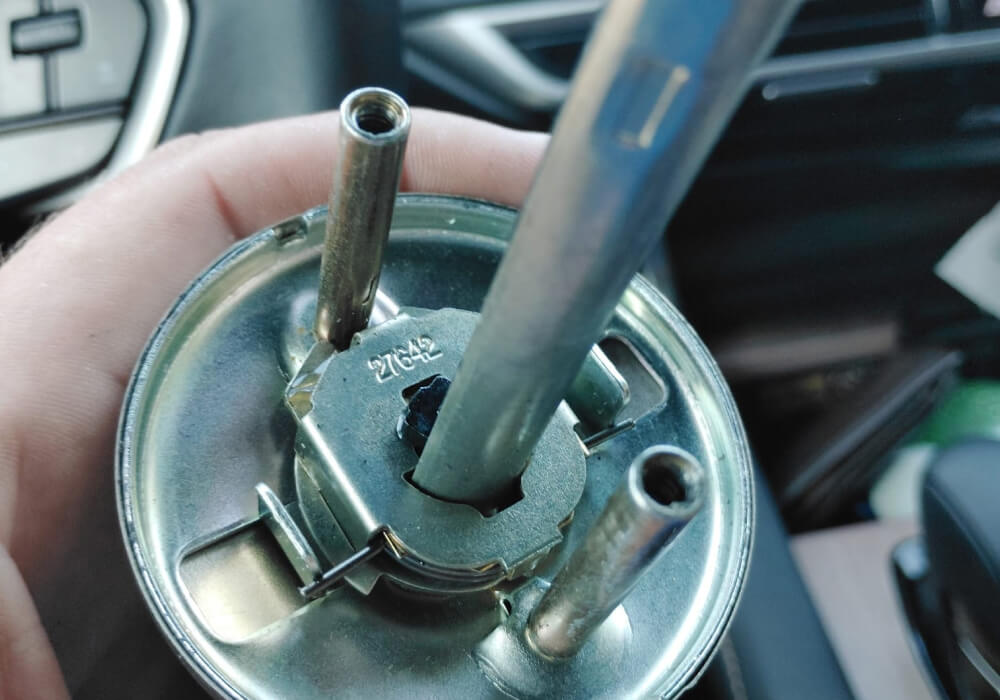
Car ignition lock cylinder removed and held during an ignition repair

The Ignition Cylinder Is Worn or Jammed

Inside the ignition sits a lock cylinder full of small wafers, and over time these wear down or grit works its way in. When the cylinder itself is the trouble, even a good key struggles. The signs are different from a worn key:
  • Your spare catches at the same spot too
  • The key turns roughly, or hangs up at the same point every time
  • You feel grit or grinding as it moves
  • It started after the key was forced hard once before
This is where the do it yourself part ends. Do not force the key and do not flood the cylinder with oil, because both make it worse. A worn or jammed cylinder needs to be cleaned, serviced, or replaced by a locksmith, who can also cut a fresh key to the new cylinder so you leave with one that works.

Push to Start Cars, When There Is No Key to Turn

A car with a start button has no key to turn, but it stalls in its own ways. The button may do nothing if the brake is not pressed firmly enough, if the fob battery has died, or if the electronic column lock has engaged. Press the brake down hard and try again, and if the button stays dead, hold the fob itself against the start button, since most cars can read a dead fob that way for one start. If the wheel feels locked, rock it as you press, exactly as you would with a keyed column. A fresh fob battery is often the whole fix, so it is worth keeping a spare battery in the glovebox.

What Not to Do

When the car will not start and you are already late, the temptation is to get rough with it, and that is exactly how a small problem turns into an expensive one. Whatever else you try, avoid these:
  • Forcing the key, which can snap it off inside the cylinder
  • Spraying WD-40 or any oil into the lock, which attracts grit and gums the wafers
  • Jamming a screwdriver or any other object into the ignition
  • Turning harder and harder the same way after it has clearly stopped
None of these fix the cause, and each one adds a repair on top of the one you started with.

When to Call a Locksmith

Some of these you can settle in your driveway, and some you cannot. If your spare also catches, if the key has snapped, if the cylinder feels gritty or turns rough, or if you are simply stranded and out of time, that is the point to call. A mobile locksmith like Texas Locksmith Pros comes to the vehicle, so the car does not need a tow, and can service or replace a failing ignition or cut a fresh key on the spot. In the metros we cover, including car key replacement in Dallas, the whole job is done where the car is parked.

Expert tip

On a large share of will not turn calls, nothing is broken at all. The everyday key has simply worn round over years of use while the spare sat untouched in a drawer. If the spare turns and the daily key does not, that is your answer, and a freshly cut key is the entire fix.

Stuck with a car key that will not turn?

If the wheel and the spare have not solved it, you are likely looking at a worn key or an ignition that needs a locksmith, and both are jobs we do at the vehicle. Texas Locksmith Pros comes to your car across Texas, tells you honestly whether it is the key or the ignition, and cuts a new key or replaces the cylinder on the spot. Call (972) 544-4699 with your make, model, and year. License number B29700001.

Related Reading

Articles You May Find Useful

Service Areas

Texas Locksmith Pros Across the State

Call (972) 544-4699

FAQ

Frequently Asked Questions

Why will my car key not turn in the ignition?

The most common reason is a locked steering wheel, which frees when you rock the wheel and turn the key together. If that is not it, the usual causes are a worn key or a worn ignition cylinder.

How do I unlock a locked steering wheel?

Hold light pressure on the key in the direction it turns, and rock the wheel firmly side to side at the same time. The wheel releases the pin and the key turns. Do not force the key on its own.

My key will not turn and will not come out, what does that mean?

On an automatic this usually means the car is not fully in park. Rock the car, seat it firmly in park, and try again. If it continues, the ignition or the key is likely worn and needs a locksmith.

How do I know if it is the key or the ignition?

Try your spare. If the spare turns without trouble, your everyday key is worn and needs replacing. If the spare also catches or turns rough, the ignition cylinder is the problem.

Can WD-40 fix a key that will not turn?

No. Oil based sprays attract dust and grit and gum up the wafers inside the lock, which makes the sticking worse over time. A locksmith uses the correct dry lubricant and can service the cylinder properly.

Will a locksmith come to me for an ignition that will not turn?

Yes. A mobile locksmith comes to the vehicle, diagnoses whether it is the key or the ignition, and can cut a new key or service and replace the cylinder on site, so there is no tow.