 Dallas, Texas, USA



Car Key Replacement Cost in Texas, What You Will Pay and Why
Texas Locksmith Pros Team
If your key stopped working or went missing, the first thing you want is a real number rather than a sales pitch. Car key replacement cost in Texas is not a single price, because it depends far more on the kind of key your vehicle uses than on the shop you happen to call. A basic metal key and a push to start smart fob are not the same job, and the price difference between them is large.
This guide gives you the current ranges for each key type, breaks down what you are actually paying for, and walks through when a dealer, a mobile locksmith, or a do it yourself route makes sense. By the end you will know what a fair quote looks like before you hand anyone a card.
Before you pay for anything, make sure a new key is what you actually need. If your current key turns hard or will not turn at all, the problem may be the ignition or the lock rather than the key, and a new key will not fix it.
What Actually Sets the Price of a Car Key
- The type of key: A plain metal key with no electronics is cheap to cut, while a chip key or a smart fob carries parts and programming that account for most of the cost.
- Whether you still have a working key: Copying a key you already hold is quick and inexpensive, while replacing a key when every copy is gone means the vehicle has to be taught a new key from scratch.
- How the key blade is cut: A standard edge cut is fast, while a laser cut blade needs a special machine and more time at the vehicle.
- The make, model, and year: Newer vehicles and some imports use security systems that take longer to program, and a few late model foreign cars can only be handled by the dealer.
- Where the work happens: A mobile locksmith who comes to the vehicle saves you a tow, while a key made only at a dealership often means paying to get the car there first.
What Goes Into the Price You Pay
- The key or fob itself: This is the physical part, from a few dollars for a plain blank to several hundred for a proximity fob, and it is the piece that moves the total the most.
- Cutting the blade: The key is cut to match your locks, either by tracing a working key or by generating the code for your vehicle, and a laser cut blade takes more skill and time than a standard edge cut.
- Programming to the vehicle: Any key with a chip has to be paired to the car electronics before it will start, and that labor is a large share of the cost on a modern vehicle and nothing at all on a basic metal key.
Car Key Replacement Cost by Key Type in 2026
- Basic mechanical keys: 50 to 180 dollars. These are all metal, or a plastic head with no chip, and they show up on older vehicles. They cost the least because there is nothing to program, and copying one you still have often runs only 10 to 25 dollars.
- Transponder or chip keys: 220 to 350 dollars. These carry a chip that talks to the vehicle immobilizer, so the key has to be programmed at the car before the engine will start.
- Laser cut keys: 120 to 300 dollars. The blade is milled down the center with a special machine, and most of these also carry a chip that needs programming.
- Remote head and flip keys: 150 to 350 dollars. These combine the cut key and the lock buttons in one body, so you are paying for the remote as well as the cut and the programming.
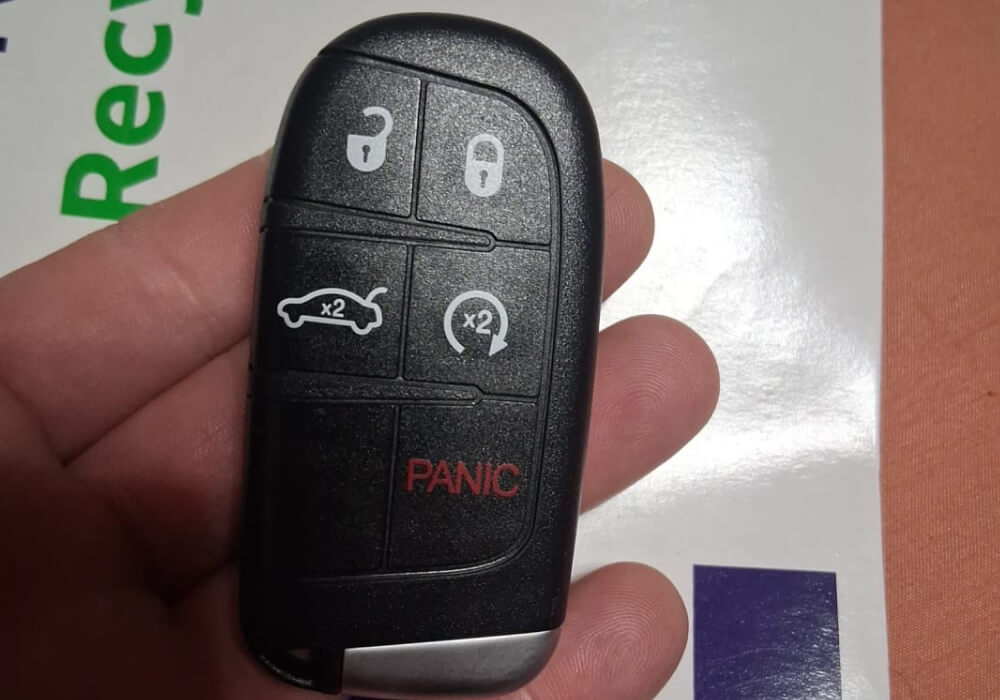
- Smart and push to start fobs: 250 to 800 dollars or more. The proximity fob alone can run into the hundreds before any labor, and some fobs pass 600 dollars on their own, which is why this type sits at the top of the range.
How Your Vehicle Make Changes the Cost
- Older and economy vehicles: Many still use basic or early transponder keys, so they sit at the low end and are the cheapest to replace.
- Mainstream late model cars and trucks: Most Ford, Toyota, Honda, and Chevrolet vehicles use transponder or push to start keys that a mobile locksmith can cut and program on site at a fair price.
- Luxury and European models: Certain BMW, Mercedes, Audi, and Volkswagen keys use protected systems and pricier parts, which raises the cost and, on some late model cars, means the dealer is the only route.
Why Losing Your Only Key Costs More Than Making a Spare
- The cutting code has to be retrieved: With no key to copy, the locksmith pulls the code for your vehicle so a correct blade can be made from scratch rather than traced.
- The immobilizer has to be reset: The car is told to forget the lost keys and accept the new one, which is what stops a found or stolen key from still starting your vehicle.
- Programming happens on the spot: A chip or smart key has to be paired to the car before it will crank, and that single step is what separates a 20 dollar copy from a job that runs into the hundreds.
Why a Spare Key Is the Cheapest Insurance You Can Buy
- A spare made now: This is usually 10 to 25 dollars for a basic key, or a small part and programming fee for a chip or smart key, because the car already trusts a key.
- The same key made later: Once the last key is gone, you pay the full replacement price from the ranges above, because the car has to be programmed from scratch again.
- The difference: A spare that costs a few dollars now can save you a few hundred later.
Expert tip
Keep your spare somewhere other than the car. A spare that lives in the glovebox is no help the day the whole set is lost or locked inside together. A key kept in a drawer at home turns what would be a tow and a full replacement into a short trip.
Dealer, Mobile Locksmith, or Do It Yourself
- The dealership: A dealer can program any key for its own brand and is sometimes the only option for certain late model BMW, Mercedes, Audi, and Volkswagen vehicles, though it is usually the most expensive route and often needs the car towed in first.
- A mobile locksmith: A locksmith who comes to your vehicle handles the large majority of makes and models, cuts and programs the key on site, and generally costs less than the dealer while saving you the price of a tow.
- Doing it yourself: On a small set of vehicles you can buy a fob and follow an at home programming sequence, which is the cheapest path when it works, though many modern cars will not allow it and a wrong part is money spent for nothing.
Why Most Drivers Call a Mobile Locksmith
- We identify the key and pull the code: The vehicle, the year, and the lock tell us the correct blade and cut, which we generate from the code rather than from an existing key.
- We cut the blade to match: A mechanical or laser cut key is made on site to the vehicle specification, so it turns the ignition and the doors the first time.
- We program the key to the car: The chip or smart fob is paired to the car, the lost keys are cleared where the system allows it, and we confirm the engine starts before we leave.
Texas Locksmith Pros carries the cutting and programming equipment for mechanical keys, transponder and laser cut keys, remote and flip keys, and push to start smart fobs, which is why most drivers never need the dealer at all. In the metros we cover, including car key replacement in Dallas, the key is made at your vehicle. Where a specific late model import can only be handled by the brand, we say so plainly rather than sell you a key that will not work.
Extra Costs That Can Change Your Final Price
- After hours and emergency calls: A key made late at night or on a holiday can carry a higher rate than the same job on a weekday, since it pulls a locksmith out for a single visit.
- The tow you avoid: A dealer only key can require getting the vehicle there first, so the real comparison against a mobile locksmith should include the cost of that tow.
- High security and imported keys: Some keys use restricted or high security blades that cost more to source and cut, which raises the parts side of the bill even before programming.
- Extra keys made in the same visit: Adding a spare while the locksmith is already at your car is far cheaper than a separate trip later, because the setup is already done.
Questions You Should Ask Before You Pay
- Is this an all keys lost price or a spare price: The two are very different jobs, and a quote means little until you know which one the number covers.
- Is programming included in that figure: A low key price that leaves out programming is not the real cost, so confirm the number covers a key that actually starts the car.
- Will you come to my vehicle: A mobile service saves a tow, which matters most when the car cannot be driven to a shop in the first place.
- Do you handle my exact make and year: Not every provider programs every vehicle, and it is better to learn that on the phone than in the parking lot.
- Is the new key warranted: A key that fails to program or quits working should be backed by the shop that made it.