 Dallas, Texas, USA


Storefront Door Won’t Lock at Closing Time: What Should You Do?
How to narrow down whether the lock or the door is at fault, what to do before you leave, and what usually has to be repaired.
Texas Locksmith Pros Team
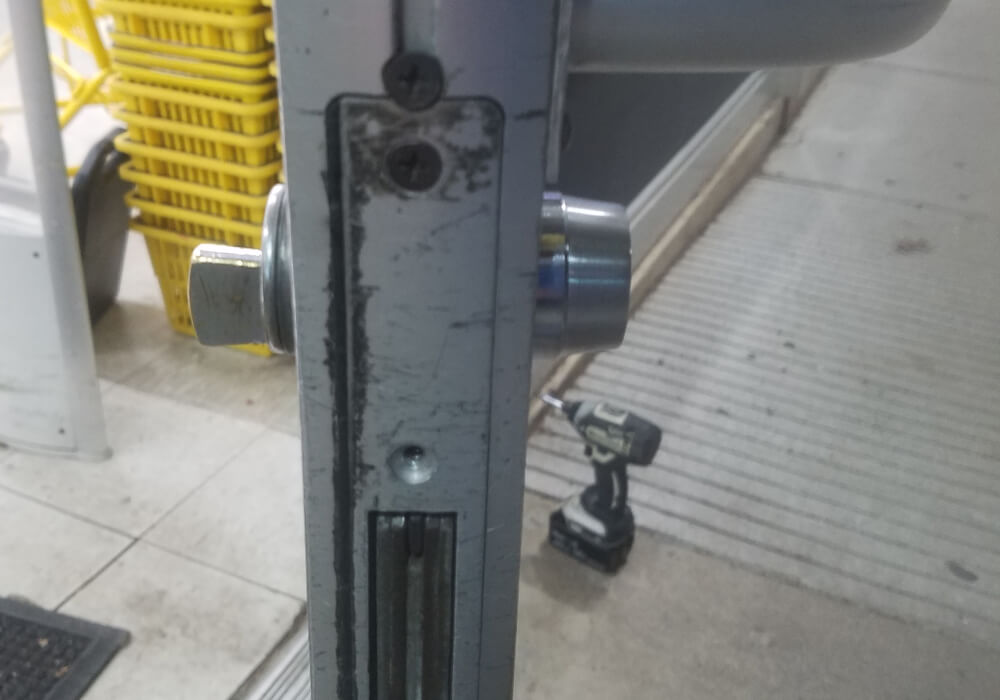
It tends to happen at the end of the day. The register is closed, and the key that has locked the front door every night will not finish its turn. Sometimes the key turns but the door still pulls open.
Most storefront doors are aluminum and glass, and many lock with a bolt in the narrow edge of the door that swings or slides into the frame, or into the other door of a pair. When that bolt cannot enter the strike opening, the cause may be the lock, the position of the door, or both.
Try the lock with the door open before anything else
This check applies to a mechanical storefront lock with a bolt you can see. If your entrance uses a push bar, an electric strike, or a keypad-controlled release, it works differently, so describe that hardware when you call.
Open the door, hold it steady, and turn the key or the thumb turn as if you were locking up. Watch the edge of the door. On a working lock, the bolt comes out fully and the key finishes its turn without effort. Pull the bolt back in completely before you close the door again, so it does not strike the frame.
The result helps narrow down the problem. If the bolt comes out cleanly with the door open, the position of the door is probably involved, although the lock may still need attention. If the bolt does not move, comes out only part of the way, or the key spins without doing anything, something in the lock has failed. The check will not show which part, but it gives the locksmith a useful starting point.
When the bolt works with the door open, the door is probably out of line
A storefront door is heavy, and it opens and closes hundreds of times a day. Over time the door moves a little in its frame, and the bolt starts catching the edge of its opening. There are a few common reasons, and more than one can be present at once.
- The door has dropped: the pivots or hinges that carry the door wear, and the door sags on the lock side. A door that only locks when it is lifted or pulled points to this cause.
- The door is not closing all the way: a closer that is leaking, damaged, or out of adjustment can leave the door resting just short of fully shut.
- Something is in the way: grit in the threshold, a loose floor mat, or debris packed into the opening where the bolt lands can stop it early.
- The door or frame has expanded in the heat: metal expands in the sun. A west-facing entrance that locks without trouble in the morning can bind after a hot afternoon.
Some signs change the situation. If the glass is cracked, the door is scraping the floor, or a pivot or hinge looks loose, stop working the door and call. A heavy glass door with a loose fitting should be left alone until it has been looked at.
On double doors, check whether the second door is held by its own bolts
Many storefronts have a pair of doors. On some pairs, one door opens for customers all day and the other is held shut by small bolts at its top and bottom that slide into the frame and the floor. The lock on the working door throws its bolt into that second door.
Where the entrance is built that way, bolts that have been left undone or have slipped leave the second door unanchored. The key turns and the lock appears to work, but both doors pull open together. Push gently on the second door. If it moves, its bolts need to be seated before the pair will hold. This does not apply to pairs fitted with push bars or other exit hardware, which are secured differently.
When the key spins or the bolt does not move, the fault is in the lock
If the lock fails with the door open, the fault is in the lock itself, and the way the key behaves offers a clue to where it is. These are faults commonly found on aluminum storefront doors.
- The cylinder has come loose: the part the key goes into is held in the door by a small screw. If that screw backs out, the whole cylinder can turn or wobble, and the key no longer moves the bolt.
- The piece behind the cylinder is worn or broken: a small arm on the back of the cylinder pushes the bolt. When it is damaged or the wrong shape, the key turns freely and nothing happens.
- The lock body has failed: the mechanism inside the door edge can break after years of use. The bolt may stop halfway, drop back, or stay in.
In each of these cases, avoid forcing the key. Forcing it can break the key and add extraction work to the repair.
What to do before you leave tonight
If the door will not lock, a few steps reduce what is exposed while you arrange a repair. None of them secures the entrance, so treat them as a way to limit risk and not as a substitute for a locked door.
- Clear the threshold and the bolt opening: remove anything loose from the floor track and from the hole or slot where the bolt lands, then try the lock again.
- Check the second door: on a pair held by top and bottom bolts, make sure those bolts are fully in.
- Use another exit: once everyone else has left, if the front door locks from inside with a thumb turn and the building has a second door that locks properly, you can lock the front from inside and leave by the other one.
- Reduce what is exposed: move cash and small valuables out of sight or off site, and set the alarm if you have one.
While anyone is still inside, the door has to stay usable as a way out, so do not chain or block it. If the entrance still cannot be locked, it is not safe to treat the building as secured. Have someone stay on site until the lock can be repaired.
What a locksmith repairs on a storefront door, and what gets replaced
Much of this work is adjustment. A loose cylinder is reset and secured. A door that has dropped is brought back into line at its pivots, and the opening for the bolt is adjusted so the bolt lands cleanly. A closer that is out of adjustment is reset, and one that is leaking or damaged is replaced.
Replacement may be needed when the lock body inside the door has broken or the bolt is worn. On these doors the lock body and the key cylinder are separate parts, so a new lock body can often be fitted behind the cylinder you already have. If the visit shows that the hardware is past repair, or that too many keys are in circulation, it is worth deciding at the same time whether to rekey, replace, or upgrade your business locks.
It also helps to know who to call. The lock, the cylinder, the pivots, the strike, and the closer are locksmith work. Cracked glass or a bent frame needs a glass or storefront company.
Before the technician leaves, lock and unlock the door several times with it fully closed, using the key from outside and the thumb turn from inside. Let the door close by itself and confirm that it shuts completely. On a pair, check that the second door stays closed when you pull on the handles.
If your front door will not lock, Texas Locksmith Pros repairs the locks, pivots, strikes, and closers on aluminum and glass storefront doors, including commercial lock repair in Dallas. We are open Monday to Saturday, 7 AM to 10 PM. Call (972) 544-4699 and tell us whether it is a single door or a pair, what the key does, and whether the bolt moves with the door open.
Frequently Asked Questions
Will I need new keys if the storefront lock is replaced?
Often not. The cylinder that your key fits is a separate part from the lock body, so the lock body can usually be changed while the cylinder stays. If the cylinder is replaced, it can often be set to your existing key. New keys are needed only when you choose to change the key or the existing one cannot be kept.
Why does my storefront door lock in the morning but not at night?
Heat is one possible reason. A metal door and frame expand through a hot day, which can close up the small gap the bolt needs. Worn pivots, a door that is slightly out of line, or a closer that is not shutting the door fully can produce the same pattern, so the door needs to be looked at to know which applies.
The door only locks if I lift it. How long can I leave it like that?
It is best dealt with soon. A door that needs lifting has usually dropped on its pivots, and it tends to keep dropping. Each time the bolt is forced in at an angle it wears, and the lock can fail with the door either locked or unlocked.