 Dallas, Texas, USA



Should Your Business Rekey, Replace, or Upgrade Its Locks?
Texas Locksmith Pros Team
First, Work Out What Is Actually Wrong
The decision gets a lot easier once you stop shopping for a lock and look at the problem first. Almost every case comes down to one of three things. The lock works fine and you only care about who can open it. The lock itself has gone bad. Or the keys have gotten out of hand. Naming which one you have is most of the battle.
Each problem has its own fix:
- Rekey: when the issue is who holds a key. The lock stays on the door and the old keys stop working.
- Replace: when the lock itself is worn, broken, or too weak for the door.
- Upgrade: when the keys are the real problem, too many out there, too easy to copy, and no record of who came in.
When Rekeying Is the Right Move
- Someone with a key leaves: a worker, a manager, or a partner who held an after-hours key.
- You have lost track of the copies: a shop that has handed out keys for years and cannot say who has them.
- You took over the space: a new tenant or owner using whatever keys the last one left behind.
- A tenant or contractor moved on: a landlord turning a unit, or a crew that finished a build-out.
- Someone broke in but the lock held: the hardware is fine, you just want any copied key shut out.
Expert tip
Do a key count this week. Go door by door and write down everyone who can open each one, by name. If you cannot finish the list for even one door, start there with a rekey. Most owners have never done this, and it shows you where you are exposed before something forces your hand.
When Replacing the Lock Is the Better Call
- The lock is worn or failing: it sticks, drags, or the key catches, common on a salon or a busy store entrance.
- It was damaged or forced: a warehouse door someone pried on needs new hardware, not a new key.
- It is builder grade or too weak: the cheap locks left on a new office rarely fit what you keep inside.
- The lock function is wrong: a storeroom, a front entrance, and a staff door each need a different type.
- The handles or code need fixing: worn knobs, loose levers, or non-compliant hardware are worth doing in the same visit.
A replacement costs more than a rekey, but on the right door it buys you hardware that works, the correct function, and a grade that lasts. If that is where you are, commercial lock installation in Dallas covers what fits which door.
When to Upgrade to Higher Security or Keyless Access
- Restricted and high security keys: keys that cannot be copied at a store, for when the risk is people making their own copies
- Master key systems: one setup where the right people open the right doors, good for offices with many doors or a building with many tenants.
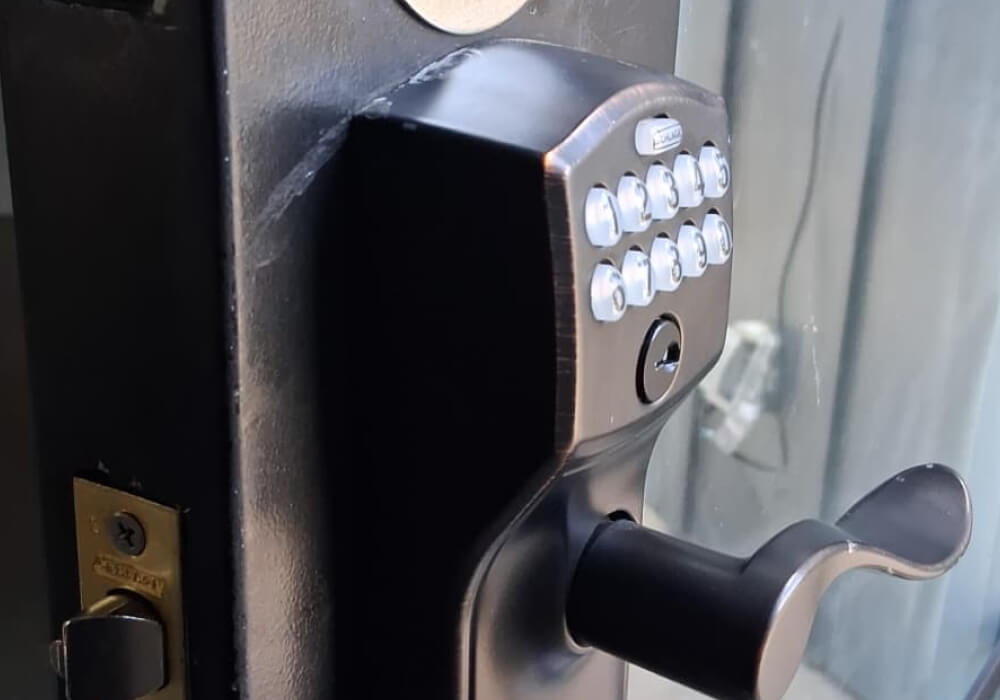
- Access control and keyless entry: fobs, codes, or phone access you can turn on or off in seconds, with a record of who came in, best for high staff turnover or several locations.
Each of these is worth a closer look than one section allows, and we cover them on their own pages, including access control and keyless entry. The main thing is to notice when your business has outgrown keys, because that is the call owners put off the longest.
Why the Same Answer Does Not Fit Every Door
- Door type and material: glass, metal, or wood decides what fits.
- Traffic and keyholders: a door two people use is not the same as one fifty people use.
- Exposure and wear: an outside door in heat and rain wears out faster than an inside one.
- Records and compliance: some businesses have to prove who got in, not just lock up.
When to Call a Locksmith
You can handle some of these yourself, and some are worth a look before you spend. A commercial locksmith like Texas Locksmith Pros can come out, see how each door is used and who needs to open it, and tell you where a rekey is enough and where the hardware or the whole setup should change. A good one will not push the biggest system on you. The job is to fit the right fix to the door, sort out who holds access, and set it up so you can add doors or locations later without starting over.